

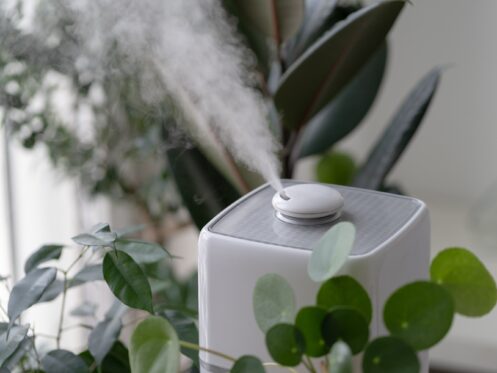
Humidifiers do a great job at balancing indoor humidity. When indoor levels drop below a certain point, the humidifier turns on to add moisture back into the air. Using the system at night is an excellent way to soothe dry sinuses, prevent itchy skin, and ensure a more restful sleep. However, not all humidifiers operate the same way, especially when it comes to portable versions vs. whole-home setups. This guide walks you through operational tips for both.
Why Do People Use Humidifiers at Night?
The amount of moisture in the air has a direct impact on how well you sleep. When it’s too dry in your home, this increases the risk of waking up with a scratchy throat and stuffy nose. Using a humidifier to increase moisture helps your respiratory health as well. It hydrates the air so your nasal passages and airways don’t dry out and become irritated. Plus, your bedroom will feel naturally cozier. Higher levels of humidity can increase the feeling of warmth. Using a humidifier at night during winter may help you use your heating equipment less, lowering your monthly expenses. Conditions in the summer are usually more humid. You may not need your humidifier as much at night.
How Do Portable Humidifiers Work?
Portable humidifiers are available in many different models and styles. Most versions have a standard tank that you must keep full of water. The tank has a wick or heating element connected to it. This component is responsible for converting the water into a fine mist. Some units have a vibrating ultrasonic plate that breaks the water into tiny droplets to create a cool vapor. No matter the type you use, you’ll have to deal with frequent refills and regular cleaning to prevent mineral buildup. You’ll also have to deal with moving the unit from one room to another. Portable models only cover a small amount of square feet at one time.
How Do Whole-Home Humidifiers Work?
Whole-home humidifiers are very different from portable versions. Instead of moving the unit around your home, the system connects to your HVAC system. When humidity levels drop below a certain setting, this activates the humidifier to introduce water vapor into the ductwork. The conditioned air moving through the ducts then captures this moisture as it flows into each room. Rather than refilling empty tanks every few days, the humidifier connects to your main water line, allowing for automatic refilling.
Is It Okay to Run the Humidifier All Night?
It’s perfectly acceptable to let your humidifier run all night. This includes portable versions and whole-home models. Doing so ensures the air doesn’t become too dry as you sleep. Many people find that a humidifier is the key to creating sleeping spaces that are comfortable and beneficial for one’s health. You may even notice less tossing and turning and fewer static shocks while you’re in bed.
It’s safe to use a humidifier all night because this type of equipment comes with a built-in humidistat. If it detects excessive humidity levels, it will shut itself off to prevent adding too much moisture to the air.
Ways to Make Sure Your Humidifier Runs Safely All Night
No matter the type of humidifier you use, it will need regular care to operate reliably. You can use the following maintenance tips to help your unit last longer and perform better.
Use Manufacturer Recommended Settings
There is an ideal operating range for every type of humidifier. You can find this range by checking the owner’s manual. Following these guidelines is crucial to preventing excess wear on the equipment and making sure it doesn’t decrease humidity instead of increasing it.
Clean Water Reservoir Frequently
Portable units benefit from regular water reservoir cleaning. Ideally, this should occur once every few days. This process helps prevent biofilm buildup and mineral deposits. It also keeps the water source fresh so that the mist is clean and safe to breathe. Whole-home units typically need professional cleaning once per year.
Replace Filters as Needed
If your portable humidifier unit has wicking filters or water panels, you must replace them as soon as you notice signs of scale buildup or discoloration. These signs tend to vary from one home to the next since water hardness levels differ. On whole-home humidifiers, you should change the filter every one to three months.
Keep Unit on a Level Surface
Portable and whole-home versions need a flat, stable surface to set on. This prevents accidental tripping and reduces the risk of internal leaks. Furthermore, it ensures the internal sensors properly read water levels.
Use Distilled Water When Possible
With portable units, it’s smart to use distilled water rather than tap water. The distilled water helps avoid mineral deposits in the tank, making it easier to keep clean.
Inspect Power Cord for Damage
If you notice any damage to the electrical cord, don’t use the humidifier overnight. Fraying and heat damage may contribute to electrical shorts, which can create fire and other safety risks. Getting the cord repaired or replaced is crucial to preventing hazards.
Avoid Overfilling the Tank
On portable units, the tank will have a “max fill” line. Staying below this line is vital to keeping water from splashing onto the electrical components. We always recommend staying about half an inch below the “max fill” marker each time you refill the tank.
Keep Air Intake Vents Clear
Unlike portable units, whole-home versions need optimal airflow through the ductwork to function correctly. This means all air vents throughout the home should always remain open and clear. Closed vents greatly increase the likelihood of pressure imbalances, reduce efficiency, and lead to uneven humidity levels.
Check Built-In Humidistat Settings
All humidifiers have a humidistat that tells the system when to turn on. This component needs accurate calibration to reflect the actual moisture in the home. If you think your unit isn’t reading correctly, we can recalibrate it for you.
Place Portable Units Strategically
Where you place portable humidifiers greatly influences how well they distribute moisture. You don’t want them too close to the bed because excess mist can cause damp bedding and discomfort. You also don’t want them placed directly on carpet or wood furniture since moisture can cause staining or damage.
Best placement tips for portable humidifiers:
- Place on waterproof surface
- Keep 3 feet away
- Avoid carpeted floor areas
- Allow open air circulation
- Center the device on a flat surface
Seal Duct Leaks Promptly
The condition of your ductwork influences how well a whole-home humidifier can keep moisture levels balanced. If it has leaks, gaps, or loose connections, the moisture will seep out before it reaches each room. We can fix duct leaks for you using proven repair methods.
Start Achieving Better Sleep With a Humidifier
Meade’s Heating and Air is here to answer any questions you have about portable or whole-home humidifiers. We offer air quality testing that checks humidity levels and airborne contaminants. The findings guide us on the recommendations we make for equipment selection and system adjustments. Contact Meade’s Heating and Air today to access expert humidity control services in Ashburn, VA.